Agentic Engineering Weekly for July 3–11, 2026

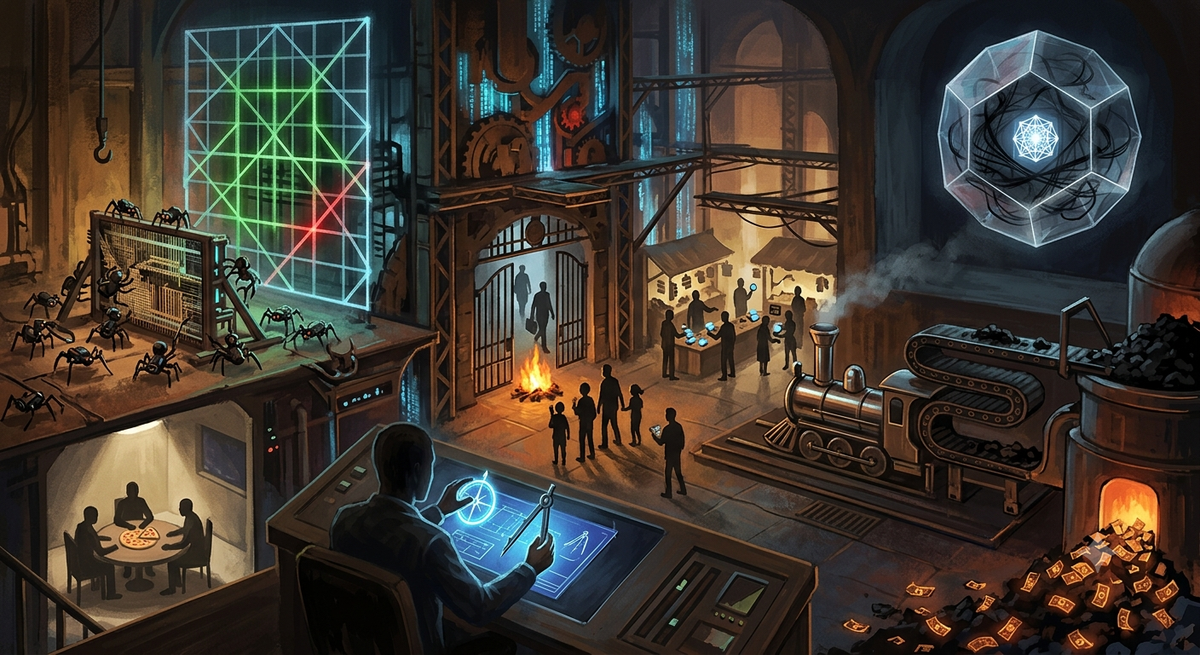
This week we got our write-up of the Bun rewrite for $165k in tokens, Seldo published the numbers on what AI did to the junior market, and Hank Green explained why efficiency gains will make our AI bills bigger, not smaller. Underneath the receipts: the people building software factories are starting to realise the factory itself is a moving target. Software engineers rejoice, we're not going anywhere.
My top 3 picks this week
- Steve Yegge: 'You'll Never Write Code the Same Way Again': The clearest articulation yet of what a software factory actually is, from someone who's been right about these shifts before (video)
- Unfortunately, You Need to Know What the Jevons Paradox is: Coal-era economics explained so clearly you can't unsee it in today's world (video)
- .NET Testing Techniques You Didn't Know You Needed - Dante De Ruwe: The advanced testing techniques that just became affordable, demonstrated hands-on (video)
This week's video
AI is splitting software engineers into 5 roles: Prototyper, Builder, Sweeper, Grower, Maintainer. That's what Boris Cherny, Head of Claude Code at Anthropic, sees happening on his own team. Some of these boxes are the best career bet of the coming decade. One of them is where vibe coders get stuck, and why their projects keep dying at the same wall.
Fun fact: this map is twenty years old. Simon Wardley (Explorers, Villagers, Town Planners) and Kent Beck (Explore, Expand, Extract) drew it decades ago, complete with warning labels we'll be revisiting in the coming months. In this video we recover those warnings and turn the map into career advice you can use today.
A factory is not a stable end state
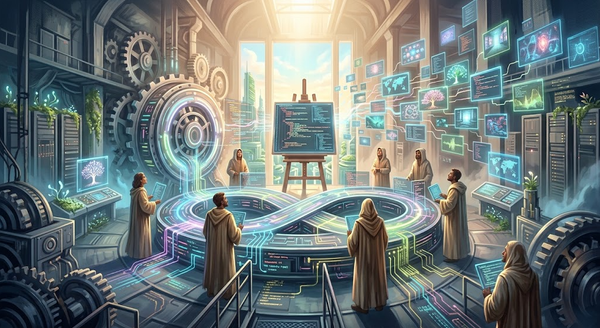
Steve Yegge has a name for where this is all heading: the software factory. Agent swarms doing the inner loop, humans owning direction, taste, and verification. Tessl is already nudging this transition internally, banning interactive coding agent sessions and measuring their factory with three metrics. And Lilian Weng just gave the same idea its research-lab framing: harness engineering as the path to recursive self-improvement.
But here's the part the factory evangelists undersell, and Yegge himself concedes it: a factory is not a stable end state. Every model release re-tools the floor. Andrew Harmel-Law reads the same moment through the Buddhist parable of the raft: you build a raft to cross a river, and on the far shore you must choose whether to leave it behind or haul it onward. His raft is our practice stack: TDD, pair programming, the act of typing itself. Letting go is hard, because these practices carried us to this exact moment and became part of who we are. His crucial nuance: the practices were always proxies. We didn't do TDD for coverage; we did it to get three distinct modes of reasoning about a system. We didn't domain model to produce class diagrams; we did it to build shared understanding between people. Put down the containers, maybe. What they carried, we may need more urgently than ever now that code is generated fast and the reasoning behind it is opaque. Harmel-Law refuses the easy verdict: confidently declaring practices dead is just a different kind of attachment. His prescription is experiments: drop a practice for a sprint and reflect on what you miss, and why.
Which is why a forty-year-old paper keeps coming up. Peter Naur argued in 1985 that a program isn't the code, it's the theory in the builders' heads. Addy Osmani compresses the career consequence into three words: own the outer loop. Agents win the inner loop, they run circles around every coder. Your value migrates to deciding what to build, verifying it works, and holding the theory. A factory where nobody holds the theory won't be along for very long.
Worth reading:
- Steve Yegge: 'You'll Never Write Code the Same Way Again': The clearest articulation yet of what a software factory actually is, from someone who's been right about these shifts before (video)
- Is Software Engineering Having a "Raft Moment"?: The most original frame from the FOSE retreat write-ups, and it refuses the cheap "TDD is dead" take: the practices were proxies, and what they carried may matter more than ever (article)
- Own the Outer Loop: Three words that will save you reading fifty career-advice posts (article)
- Harness Engineering: The New Discipline of Agentic Dev: What actually happens inside a team that bans interactive coding sessions (video)
- Peter Naur - Programming as Theory Building: The 1985 paper that explains why the factory still needs you, walked through by Felienne Hermans (podcast)
The junior market didn't shrink, it got repriced
Laurie Voss (Seldo) published the data everyone's been arguing about from vibes: junior programmer hiring is down 19% while developers over 40 are thriving. Meanwhile millions of non-developers are shipping real software without ever holding the job title. Read that again: the credential collapsed while the activity exploded. Programming has never been more popular; getting hired to learn it has rarely been harder.
The counterweight has receipts too. Economists at Ramp linked corporate spending data to workforce records and found that firms adopting AI heavily grow employment by 10%, including entry-level hiring. Both things can be true at the same time: the torch and the growth are real, they're just not evenly distributed. Cat Hicks' research points at the variable that decides which side of the line you land on: developers in cultures that treat coding as learnable experience embrace people entering the field. The torch burns hottest where learning cultures are weakest.
The question nobody in this fight answers: if juniors can't get in the door, who becomes the next generation of seniors? Addy Osmani's framing is the most useful compass I've seen for anyone early in their career: AI gets good at anything with an answer key. Your career is everything that doesn't have one.
Worth reading:
- AI has torched the market for junior programmers: The actual numbers behind the junior-market anxiety, from the former npm COO (article)
- Does AI eliminate jobs? Economists find heavy adopters hire more.: The strongest counter-evidence, built on real spending data rather than surveys (article)
- The Agent-Era Career: One sentence of career advice worth a whole book: everything without an answer key (article)
- Cat Hicks on identity threat: The research variable that halves AI identity threat, and it's cultural, not technical (article)
Bun in Rust: the first flagship case study with an invoice attached
Jarred Sumner rewrote Bun from Zig to Rust in eleven days. Not a toy: 50+ parallel workflows running roughly 64 Claude instances across four worktrees, adversarial code review where separate agent contexts assumed each other's code was wrong and hunted for bugs, and porting guides written before a single line of code. Cost: about $165,000 in API tokens, against an estimated three engineer-years of conventional work. The result: 128 bugs fixed, the binary 20% smaller, memory leaks instrumented and gone.
The critical detail is easy to miss: Bun's million-plus TypeScript test assertions served as the language-independent ground truth that made 64 parallel agents safe to unleash. The rewrite didn't just succeed because the agents were smart. It succeeded because the verification harness could tell them, instantly and mechanically, when they were wrong. Simon Willison tells the same story at hobby scale the same week: sqlite-utils 4.0, mostly written by Claude, with the dollar amount ($149.25) right in the title. Case studies are starting to come with numbers attached, and transparency about cost is becoming part of the craft.
Worth reading:
- Rewriting Bun in Rust: The most detailed public account of large-scale agentic engineering yet, worth every minute (article)
- Simon Willison on the Bun rewrite: A sharp second read that picks out the workflow tricks worth stealing (article)
- sqlite-utils 4.0rc2, mostly written by Claude Fable (for about $149.25): The same playbook at solo-maintainer scale, invoice included (article)
- How This Ex-Meta L8 Engineer Ships 40 PRs a Day with AI Agents: An interview about one person's self-built factory, tools and all (video)
Verification cost hit zero, the excuses didn't
Mutation testing. Property-based testing. Approval testing. These techniques were always useful; but they were expensive. Writing good property generators or reviewing mutation reports took time nobody would budget. Dante De Ruwe's NDC Copenhagen talk lands the question that follows from agentic AI collapsing that cost to near zero: underinvesting in verification is now a choice, not a constraint. What's your excuse?
The stakes come from GitLab's 2026 report, and they're brutal: 78% of developers say they code faster with AI, yet overall software delivery hasn't accelerated. The theory of constraints called, and the bottleneck moved exactly where it said it would: downstream, into testing and review. Speeding up generation while starving verification just piles inventory in front of your reviewers. Kenton Varda's moratorium on AI-written PR descriptions is the same problem in miniature: AI output optimizes for looking done, narrating details visible in the diff while omitting the framing a reviewer actually needs.
Note how this connects to the Bun story above: the million-assertion test suite is what made the 64-agent swarm safe. Verification isn't a tax on the factory. It's a prerequisite.
Worth reading:
- .NET Testing Techniques You Didn't Know You Needed - Dante De Ruwe: The advanced testing techniques that just became affordable, demonstrated hands-on (video)
- AI Tools Accelerate Coding, but Not Overall Software Delivery: The GitLab data that should be on a slide in your next engineering all-hands (article)
- Quoting Kenton Varda: Why one of the sharpest systems engineers alive banned AI PR descriptions from his team (article)
- Stop being the code review bottleneck: Four concrete fixes with prompts, immediately usable (article)
The Jevons paradox comes for your token bill
In 1865, William Stanley Jevons noticed that more efficient steam engines increased England's coal consumption. Cheaper per unit means more units, and total spend goes up. Hank Green just gave that paradox the mainstream explainer it needed, and every CFO signing an AI contract is about to learn it the hard way: efficiency gains won't shrink your AI bill, they'll grow it. Each task got cheaper, so you run a hundred times more tasks.
Computerphile explains how a trivial task burns thousands of tokens once an agent "looks after it" for you. Cursor's usage data says the real spend is input tokens, not output: agents re-reading your codebase on every turn. 404 Media obtained emails showing companies already throttling employee AI access because usage-based pricing met Jevons-scale consumption. I keep coming back to unit economics as the lens here: the web scaled because serving one more user cost nearly nothing, and AI inference obviously doesn't share that property.
Benedict Evans asks the equilibrium question from the supply side: model labs can name their price during today's capacity crunch, but why won't they end up as low-margin commodity infrastructure once supply catches up? Martin Alderson's answer: open-weight models that compete with frontier ones at 15-20% of the price already exist, and margins don't survive that.
Worth reading:
- Unfortunately, You Need to Know What the Jevons Paradox is: Coal-era economics explained so clearly you can't unsee it in today's world (video)
- Why AI Tokens are so Expensive - Computerphile: Good explainer on why agentic AI eats your tokens (video)
- Ways to think about token pricing: The strategic frame for where pricing goes after the supply crunch (article)
- GLM 5.2 and the coming AI margin collapse: Why open-weight models at 15-20% of the price break the current business model (article)
Anthropic found a global workspace inside Claude
Anthropic's interpretability team published research showing that verbalizable representations form a global workspace inside Claude. Out of everything happening in the model, only a small fraction is accessible to the model itself: things it can describe, hold in mind, and reason about. The vast majority isn't. If that sounds familiar, it should: it's strikingly parallel to global workspace theory, the leading neuroscience concensus on human consciousness. The internet immediately nicknamed it J-space and went straight to "but is it conscious?"
This gives us a principled way to test what a model can and cannot report about its own processing. That matters for everything from debugging agent behavior to deciding when to trust a model's self-explanations. Fireship's take is the fun entry point, but the paper itself is worth your time for the methodology alone: how do you even design an experiment about what a model knows about itself?
Worth reading:
- A global workspace in language models: The accessible version of the most talked-about interpretability result this year (article)
- Verbalizable Representations Form a Global Workspace in Language Models: The actual paper (a heavy read) (article)
- The different levels of how Claude thinks: Anthropic's own explainer drawing the neuroscience parallel explicitly (video)
- Claude is definitely not conscious…: Fireship's ELI5 explainer (video)
AI shrinks teams back to two pizzas
Werner Vogels looked at what made Amazon's Quick Desktop team work and found the same thing that has always produced the best work he's seen: a small group of people who trusted each other, owned the problem end-to-end, and acted on conviction. His argument: the coordination overhead that bloated teams past the two-pizza limit is exactly the work AI absorbs best. Small teams aren't nostalgic; they're affordable again.
The org-chart consequences are already showing. Anthropic removed senior titles because seniority ladders stopped describing how small AI-native teams actually work. Hannah Foxwell argues the dev team needs redesign, not patching. But John Cutler names the failure mode worth watching: the same tools that supercharge individuals push them into single-player mode. A five-minute hallway conversation solves what a week of solo thinking can't. The two-pizza dividend only pays if the team is small enough, and together enough, to actually talk.
Worth reading:
- A return to two-pizza culture: Amazon's CTO on why AI makes small end-to-end teams viable again (article)
- Single Player to Multiplayer: AI, Context, and Collaboration - John Cutler: The underexamined risk that AI tools push teams into single-player mode (video)
- Why Anthropic Got Rid of Senior Titles: The org-design experiment from the team building the tools (video)
- The Dialogue Dividend: Why hallway conversations outperform solo thinking, and what that means for team size (article)
Quick Hits
- A Field Guide to Fable: Finding Your Unknowns: Anthropic's guide to capability overhang: your model can do more than your interface lets it show (article)
- Field Guide to Fable - Thariq Shihipar: The talk version, with the Pokemon demo that makes capability overhang click instantly (video)
- Matt Pocock's skills walkthrough: 160K stars and finally a tutorial: the whole grill-spec-tickets-implement-review flow, end to end (article)
- The new GPT-5.6 family: Luna, Terra, Sol: OpenAI's three-sizes launch, with Sol claiming the frontier this week (article)
Curated from 307 sources across articles, podcasts, and videos. Week of July 3–11, 2026.